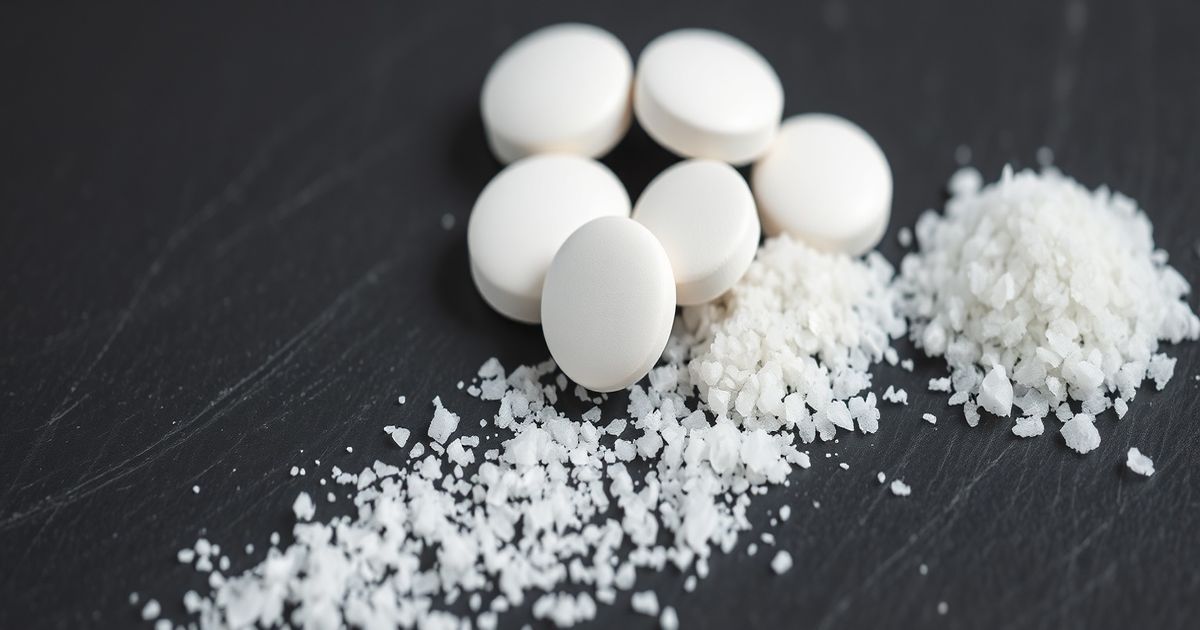
Tablet vs Granulated Salt: Which One to Choose for Your System
The eternal question: tablets or granules?
We get this question at least once a day. The answer isn't as simple as "get tablets, they're better." Both types have advantages, and the right choice depends on your specific equipment and use case.
Physical differences
| Parameter | Tablet | Granulated |
|---|---|---|
| Shape | Flat tablets 15-25mm | Granules 2-4mm |
| NaCl purity | 99.5-99.8% | 99.5-99.7% |
| Dissolution speed | Slow (30-60 min fully) | Fast (5-15 min) |
| Caking tendency | Low | Medium |
| Sludge at bottom | Minimal | Possible with large doses |
When to choose tablet salt
Tablet salt is the standard for water softening systems. Even dissolution maintains stable brine concentration — critical for ion-exchange resin. Tablets don't form "mush" at the bottom of the brine tank, unlike granules which can clump.
Recommended for: industrial softeners, boiler rooms, household Ecosoft/BWT systems, any ion-exchange filters.
When to choose granulated
Granulated salt has its niche:
- Dishwashers — granules fill the salt compartment more densely and dissolve faster in short cycles
- Pool first fill — dissolves 100+ kg in hours vs a day for tablets
- Industrial processes requiring rapid brine preparation
- Small brine tanks — granules won't "bridge" over water level
Price comparison
Tablet salt is typically 10-20% more expensive per bag. But lower consumption and fewer service issues make the total cost of ownership roughly equal. Choose by technical requirements, not bag price.
Can you mix them?
Technically yes, but we don't recommend it. Granules settle to the bottom, tablets stay on top — you get two layers with different dissolution rates.
Our recommendation
When in doubt — go with tablets. They work for 90% of water treatment scenarios. Granulated — only for dishwashers, pools, or processes needing fast dissolution.
Both types in stock at our Kyiv warehouse. Wholesale prices from 5 bags.