Salt for Water Softening: How It Works and How Much You Need
Why water gets hard
Hard water contains excess calcium and magnesium salts. They enter water naturally as it passes through limestone. In Ukraine, particularly hard water is found in Kyiv, Poltava, Cherkasy, and Dnipro regions — 7 to 12 mg-eq/L when the norm is under 7.
Hard water causes scale in boilers (reducing efficiency), damages textiles in laundries, leaves spots on dishes, and destroys plumbing.
How a softener works
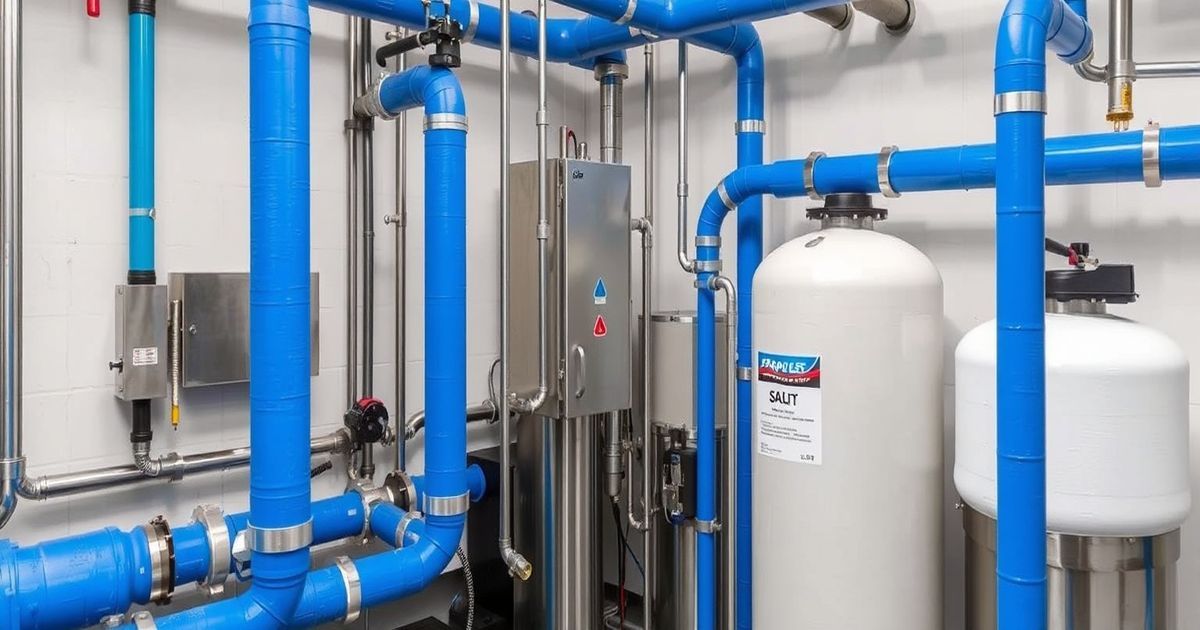
Inside a softener is a column of special resin "charged" with sodium ions. When hard water passes through, the resin swaps calcium/magnesium ions for sodium — producing soft water.
But the resin eventually saturates with calcium and stops working. That's where salt comes in — it regenerates the resin by flushing it with concentrated brine that displaces calcium back out.
How much salt does a softener use?
| System type | Resin volume | Salt/month | Bags 25kg/year |
|---|---|---|---|
| Household (apartment) | 10-15 L | 15-25 kg | 8-12 |
| Cottage / small café | 25-50 L | 30-60 kg | 15-30 |
| Boiler room (apartment building) | 100-200 L | 100-300 kg | 50-150 |
| Industrial | 500+ L | 500+ kg | 250+ |
Use our salt consumption calculator for precise estimates.
Which salt to use
Only tablet salt NaCl 99.5%+. High purity prevents resin contamination, slow dissolution maintains stable brine concentration.
Never use: iodized kitchen salt, sea salt, technical (road) salt, or salt with anti-caking agents.
How to reduce salt consumption
- Set regeneration by meter, not timer
- Verify hardness settings match actual water hardness
- Service the system regularly — dirty injectors can double salt usage
- Use quality salt — cheap salt with impurities contaminates resin faster