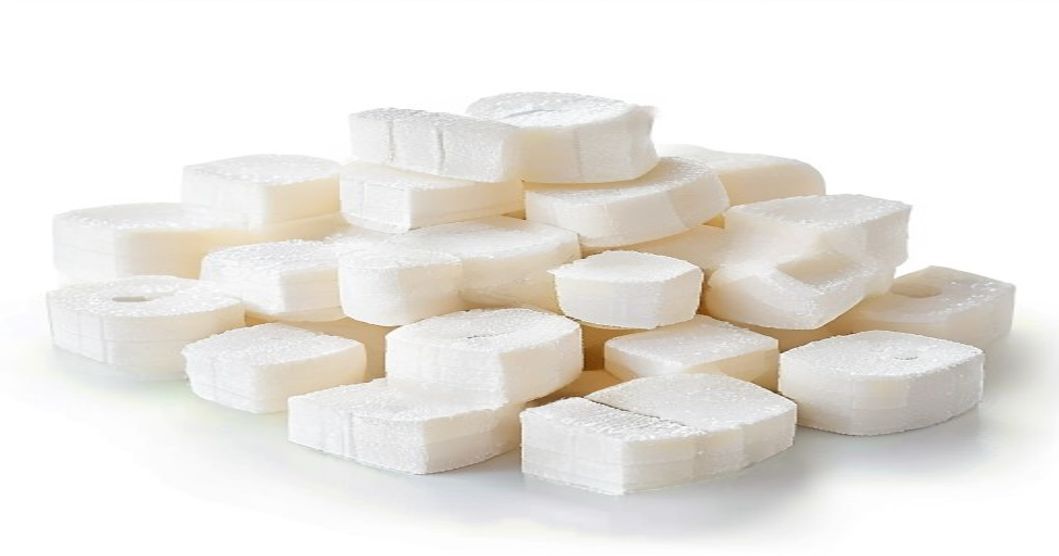
Why Extra Grade Salt Tablets Cost More: What's Inside the Tablet
Customers often ask: why do salt tablets labelled "Extra" cost 15-25% more than regular ones when both look identical? White tablet, 25 kg bag. The truth is the difference isn't in the packaging. It's inside the tablet itself.
Let's break down what makes up the price, how raw material fraction affects your equipment, and when it makes sense to pay more.
Two types of raw material, two different tablets
All salt tablets are essentially compressed table salt. But "table salt" comes in different grades. It all depends on the grind of the raw material used for pressing.
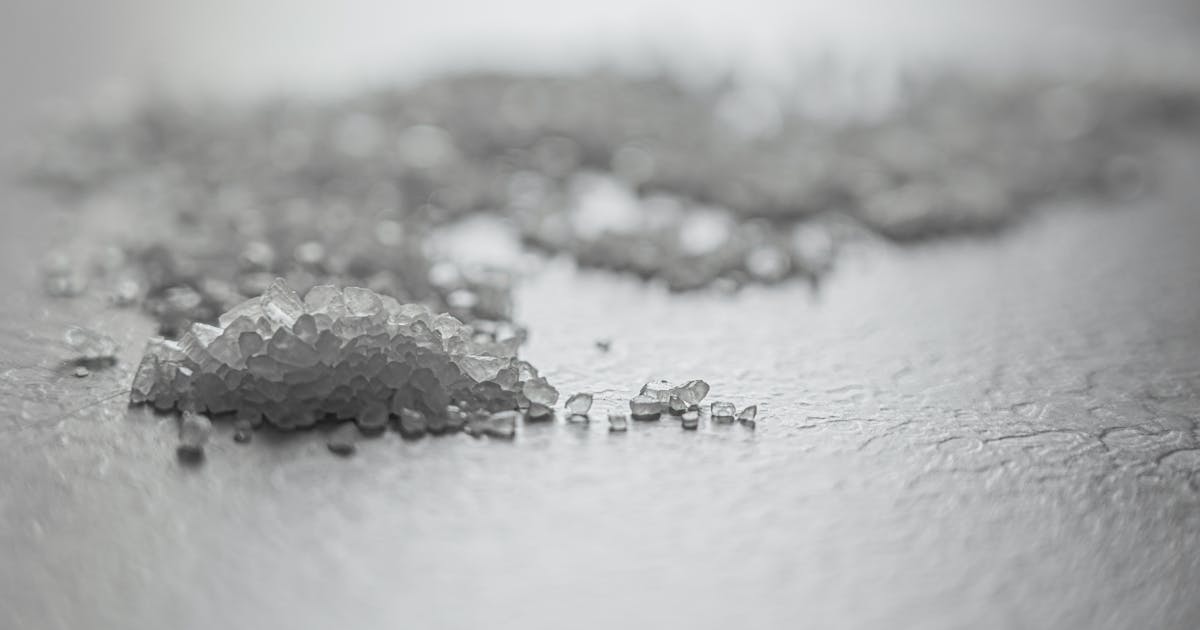
Regular tablet (grind 0)
Most salt tablets on the market are made from zero-grind salt, which is standard table salt with crystal size of 0.5-1.2 mm. During pressing, microscopic gaps remain between crystals because larger particles can't fit perfectly against each other. The result is a tablet with moderate density that dissolves in water relatively quickly.
Characteristics:
- Raw material: grind 0 salt (crystals 0.5-1.2 mm)
- NaCl content: 99.7%
- Dissolution rate: higher (less dense tablet)
- Price: standard
Extra grade tablet

Extra grade salt is a completely different raw material. Particle size starts from 0.01 mm (10 microns). It's essentially salt dust, so fine it feels like flour to the touch. When this powder gets pressed, particles fill the space between each other perfectly, like sand filling gaps between pebbles. The tablet comes out significantly denser and harder.
Characteristics:
- Raw material: Extra grade salt (particles from 0.01 mm)
- NaCl content: 99.8-99.9%
- Dissolution rate: lower (maximum density tablet)
- Price: 15-25% higher
Why Extra costs more: 2 price factors
1. More expensive raw material
Producing salt with 0.01 mm fraction is much harder than regular grind 0. It requires either vacuum evaporation (a very energy-intensive process) or additional grinding and sieving through the finest screens. Extra grade raw material costs 20-30% more before it even reaches the press.
2. Stricter quality control
Extra grade means minimum impurity content. Each batch undergoes additional testing for calcium, magnesium, and insoluble residue. For industrial clients, this means fewer deposits in filters and ion exchange columns.
How it affects equipment performance
The difference between the two tablet types isn't about "better" or "worse". It's simply different behaviour in water, and each suits its own conditions.
| Parameter | Regular (grind 0) | Extra |
|---|---|---|
| Dissolution rate | Faster | Slower |
| Tablet density | Moderate | Maximum |
| NaCl content | 99.7% | 99.8-99.9% |
| Insoluble residue | Up to 0.03% | Up to 0.01% |
| Risk of "mush" in tank | Higher with overloading | Minimal |
| Price per 25 kg | Standard | +15-25% |
What is "mushing" and why it matters
Picture this: you load tablets into the brine tank, and they dissolve too fast. The tank becomes oversaturated. Undissolved residue clumps at the bottom into a thick mass that professionals call "mush" or "bridge". This blocks brine flow and can shut down your water softening system entirely.
Extra tablets dissolve more slowly and evenly, significantly reducing mushing risk. For equipment running around the clock (boiler rooms, manufacturing, large buildings), this can be a deciding factor.
Who needs Extra and who can use regular
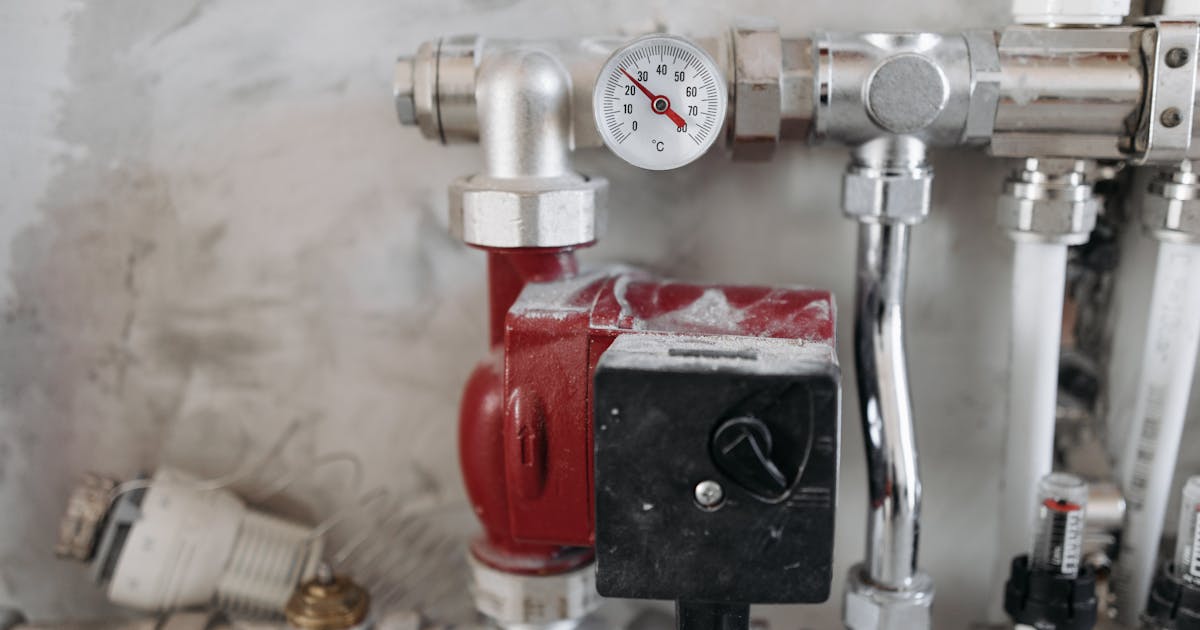
Choose Extra if:
- Industrial equipment runs continuously: boilers, steam generators, bottling lines
- Large brine tank (100+ litres) where slow dissolution ensures stable concentration
- Hard water (above 7 mg-eq/l) because fewer impurities means less load on resin
- Expensive equipment (Grunbeck, BWT, Pall) where saving on salt may cost more than repairs
- You need maximum purity for food production or pharmaceuticals
Regular tablets are fine if:
- Home filter (Ecosoft, Aquafilter, Bregus) with a small tank and low consumption
- Pool with chlorine generator, where faster dissolution is actually preferred
- Seasonal use at a cottage or summer house
- Large volumes on a tight budget since 99.7% NaCl quality is absolutely sufficient for most tasks
Both tablets are quality products
We want to emphasise this: regular salt tablets are not "bad" salt. At 99.7% NaCl, they fully meet water softening standards (EN 973). The difference with Extra is in nuances that matter for specific operating conditions.
If you have a home softener and top it up once a month, regular tablets will cover your needs completely. But if your boiler runs around the clock and every hour of downtime costs thousands, the 15-25% premium per bag pays for itself in one preventive cycle.
How to order
The SOLTIS salt tablets catalogue has both types, regular and Extra. Wholesale prices from 5 bags, delivery across Kyiv and Ukraine. Not sure which to choose? Call us and we'll match the right salt to your equipment.
Use our salt consumption calculator to estimate the volume you need for your equipment.